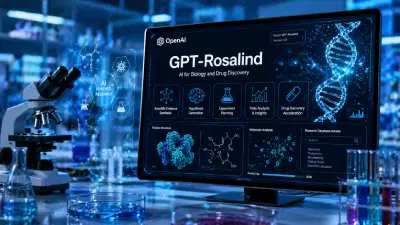
OpenAI Launches a Revolutionary Model to Accelerate Drug Discovery
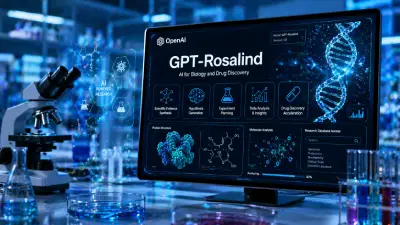
GPT-Rosalind Advances Biology Research with Artificial Intelligence
OpenAI has announced the launch of a new artificial intelligence model called GPT-Rosalind, specifically designed to support biological research and accelerate drug discovery. This launch comes amid growing reliance on artificial intelligence in scientific fields, especially given the increasing challenges of dealing with big data in areas such as genomics, biochemistry, and protein analysis.
On another front, the company drew the model's name from the scientist Rosalind Franklin, who played a pivotal role in discovering the structure of DNA, reflecting OpenAI's commitment to supporting deep scientific innovation.
Advanced Capabilities to Support Researchers
GPT-Rosalind offers a wide range of capabilities aimed at facilitating research work, as it can analyze data, compile scientific evidence, generate hypotheses, and design experiments. In addition, the model can execute multi-step research tasks, helping scientists save time and accelerate results.
Furthermore, the model provides access to scientific databases, reads the latest research, and suggests new experiments, making it a powerful tool in drug development and improving understanding of complex biological processes.
Accelerating a Process That Takes Years
In reality, developing a new drug takes between 10 to 15 years, with only one in every ten drugs successfully obtaining final approval after clinical trials. Therefore, using artificial intelligence such as GPT-Rosalind can make a significant difference in accelerating the early stages of discovery and reducing costs.
The importance of these tools grows further with more than 300 million people worldwide in need of better treatments, especially in the field of rare diseases.
Broad Collaboration with Major Companies
In this context, OpenAI is already working with several major institutions in the pharmaceutical and biotechnology sector, such as Amgen, Moderna, and Thermo Fisher Scientific, with the aim of integrating the model within research workflows and achieving practical results on the ground.
Consequently, this collaboration reflects the growing confidence of companies in the role of artificial intelligence in reshaping the future of the pharmaceutical industry.
Existing Challenges and Concerns
Despite the significant potential, important challenges remain. Drugs developed entirely using artificial intelligence are still in early stages, and none have yet reached Phase III of clinical trials.
On the other hand, experts warn of risks of misuse of these technologies, especially in designing dangerous pathogens. For this reason, more than 100 scientists have called for stricter controls on the use of sensitive biological data, to prevent any harmful applications.
Conclusion
Ultimately, GPT-Rosalind represents an important step toward employing artificial intelligence in the service of medical research and drug discovery. Nevertheless, the success of these technologies will depend on achieving a delicate balance between scientific innovation and ethical oversight. Keeping up with Arabic websites and specialized blogs, alongside what is offered by Egypt stores and Kuwait stores and vitamin stores and foreign websites, and relying on Mashhor for social media services as a key factor for success and continuity.