What is a CDN? | How do CDN networks work?
Discover how CDNs work under the hood to deliver fast, efficient, and secure content delivery to websites and internet services.
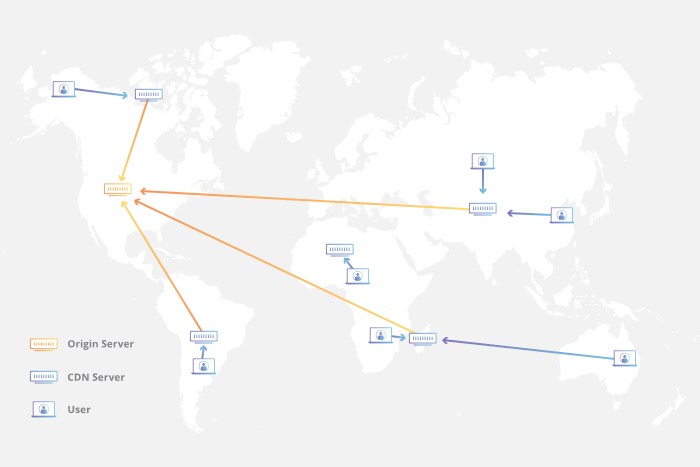
In addition to placing servers at IXPs, CDNs make a number of optimizations on standard client/server data transfers. CDNs place data centers in strategic locations around the world, enhance security, and are designed to survive various types of failures and Internet congestion.
Latency – How do CDNs improve website load times?
When it comes to loading content on websites, users quickly drop off when a site slows down. CDN services can help reduce load times in the following ways:
- The globally distributed nature of a CDN means reduced distance between users and website resources. Rather than having to connect to wherever a website’s origin server may live, a CDN allows users to connect to a geographically closer data center. Less travel time means faster service.
- Hardware and software optimizations such as efficient load balancing and solid-state hard drives can help data reach the user faster.
- CDNs can reduce the amount of data that’s transferred by reducing file sizes using techniques such as minification and file compression. Smaller file sizes mean faster load times.
- CDNs can also speed up sites that use TLS/SSL certificates by optimizing connection reuse and enabling TLS false start.
Explore all the ways CDNs help websites load faster
Reliability and Redundancy – How does a CDN keep a website always online?
Uptime is a critical component for anyone with an Internet property. Hardware failures and sharp spikes in traffic, whether from malicious attacks or simply increased popularity, are likely to take down a web server and prevent users from accessing a site or service. A well-rounded CDN has several features that will minimize downtime:
- Load balancing distributes network traffic evenly across several servers, making it easier to scale rapid influxes in traffic.
- Intelligent failover provides uninterrupted service even in the event that one or more CDN servers go offline due to hardware malfunction; the failover can redistribute traffic to the other operational servers.
- In the event of an entire data center experiencing technical issues, Anycast routing transfers traffic to another available data center, ensuring that no user loses access to the website.
Learn more about how a CDN helps keep websites online
Data Security – How do CDNs protect data?
Information security is an integral part of a CDN. A CDN can keep a site secure with up-to-date TLS/SSL certificates that will ensure a high level of authentication, encryption, and integrity. Examine the security concerns surrounding CDNs, and explore what can be done to deliver content securely. Learn about CDN SSL/TLS security
Bandwidth Expenses – How do CDNs reduce bandwidth costs?
Every time an origin server responds to a request, bandwidth is consumed. Learn how a CDN reduces origin requests and reduces bandwidth costs.