The Concept of Cybersecurity and the Standards for Properly Implementing It in Companies and Organizations to Avoid Cyberattacks

The concept of cybersecurity and the standards for properly implementing it in companies and organizations to avoid cyberattacks
Cybersecurity:
It is the practice of defending computers, servers, mobile devices, electronic systems, networks, and data from malicious attacks. It is also known as information technology security or electronic information security. The term applies in a variety of contexts, from business to mobile computing, and can be divided into several common categories.
Network Security:
It is the practice of securing a computer network from intruders, whether they are targeted attackers or opportunistic malware.
- Application security focuses on keeping software and devices free of threats. A compromised application could provide access to the data it was designed to protect. Successful security begins at the design stage, long before a program or device is deployed.
- Information security protects the integrity and privacy of data, both in storage and in transit.
- Operational security includes the processes and decisions for handling and protecting data assets. The permissions users have when accessing a network and the procedures that determine how and where data may be stored or shared all fall under this umbrella.
- Disaster recovery and business continuity define how an organization responds to a cybersecurity incident or any other event that causes loss of operations or data. Disaster recovery policies dictate how the organization restores its operations and information to return to the same operational capacity as before the incident. Business continuity is the plan the organization falls back on while attempting to operate without certain resources.
- End-user education addresses one of the most unpredictable factors in cybersecurity: people. Anyone can accidentally introduce a virus into an otherwise secure system by failing to follow good security practices. Teaching users to delete suspicious email attachments, not to plug in unidentified USB drives, and many other important lessons is vital to the security of any organization.
The Scale of the Cyber Threat
The global cyber threat continues to evolve at a rapid pace, with the number of data breaches increasing every year. A report from RiskBased Security revealed that a staggering 7.9 billion records were exposed by data breaches in the first nine months of 2019 alone. This figure is more than double (112%) the number of records exposed in the same period of 2018.
Medical services, retailers, and public entities experienced the greatest number of breaches, with malicious actors responsible for most incidents. Some of these sectors are more attractive to cybercriminals because they collect financial and medical data, but all businesses that use networks can be targeted for customer data, corporate espionage, or customer attacks.
As the scale of the cyber threat continues to grow, the International Data Corporation forecasts that worldwide spending on cybersecurity solutions will reach $133.7 billion USD by 2022. Governments around the world have responded to the growing cyber threat with guidance to help organizations implement effective cybersecurity practices.
In the United States, the National Institute of Standards and Technology (NIST) has established a cybersecurity framework. To combat the proliferation of malicious code and aid in early detection, the framework recommends continuous real-time monitoring of all electronic resources.
The importance of system monitoring is reflected in the ”10 Steps to Cyber Security”, guidance provided by the UK Government’s National Cyber Security Centre. In Australia, the Australian Cyber Security Centre (ACSC) publishes guidance on how organizations can counter the latest cybersecurity threats.
Types of Cyber Threats
The threats countered by cybersecurity are threefold:
- Cybercrime includes individual actors or groups targeting systems for financial gain or disruption.
- Cyber attacks often involve politically motivated information gathering.
- Cyberterrorism aims to undermine electronic systems to cause panic or fear.
So, how do malicious actors gain control of computer systems? Here are some of the common methods used to threaten cybersecurity:
Malware
Malware means malicious software. Malware is one of the most common cyber threats — it is software created by a cybercriminal or hacker to disrupt or damage a legitimate user’s computer. Malware is often spread via an unsolicited email attachment or a seemingly legitimate download, and cybercriminals may use it to make money or in politically motivated cyberattacks.
There are a number of different types of malware, including:
Virus: A self-replicating program that attaches itself to a clean file and spreads throughout a computer system, infecting files with malicious code.
- Trojans: A type of malware that disguises itself as legitimate software. Cybercriminals trick users into uploading Trojans onto their computers, where they cause damage or collect data.
- Spyware: A program that secretly records what a user does, so that cybercriminals can make use of this information. For example, spyware could capture credit card details.
- Ransomware: Malicious software that locks a user’s files and data, with the threat of erasing them unless a ransom is paid.
- Adware: Advertising software that can be used to spread malware.
- Botnets: Networks of malware-infected computers that cybercriminals use to perform tasks online without the user’s permission.
SQL Injection
An SQL (Structured Language Query) injection is a type of cyberattack used to take control of and steal data from a database. Cybercriminals exploit vulnerabilities in data-driven applications to insert malicious code into a database via a malicious SQL statement. This gives them access to the sensitive information contained in the database.
Phishing
Phishing is when cybercriminals target victims with emails that appear to be from a legitimate company asking for sensitive information. Phishing attacks are often used to dupe people into handing over credit card data and other personal information.
Man-in-the-Middle Attack
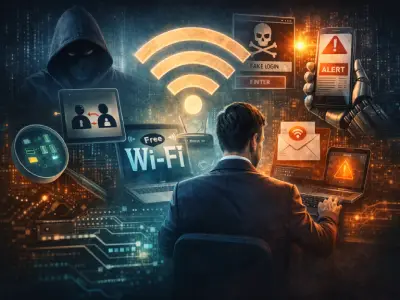
A man-in-the-middle attack is a type of cyber threat where a cybercriminal intercepts communication between two people in order to steal data. For example, on an unsecure WiFi network, an attacker could intercept data being passed from the victim’s device to the network.
Denial-of-Service Attack
A denial-of-service attack is where cybercriminals prevent a computer system from fulfilling legitimate requests by overwhelming networks and servers with traffic. This renders the system unusable, preventing the organization from carrying out vital functions.
Latest Cyber Threats
What are the latest cyber threats that individuals and organizations need to guard against? Here are some of the most recent cyber threats reported by the UK, US, and Australian governments.
Dridex Malware
In December 2019, the US Department of Justice (DoJ) charged the leader of an organized cybercriminal group for their part in a global Dridex malware attack. This malicious campaign affected the public, government, infrastructure, and businesses across the globe.
Dridex is a financial Trojan with a range of capabilities. It has been affecting victims since 2014 by infecting computers through phishing emails or existing malware. Capable of stealing passwords, banking details, and personal data that can be used in fraudulent transactions, it has caused massive financial losses amounting to hundreds of millions.
In response to Dridex attacks, the UK’s National Cyber Security Centre advises the public “to ensure devices are patched, anti-virus is turned on and up to date, and files are backed up”.
Romance Scams
In February 2020, the FBI warned US citizens to be aware of confidence fraud perpetrated by cybercriminals using dating sites, chat rooms, and apps. Perpetrators exploit people looking for new partners, tricking victims into giving up personal data.
The FBI reported that romance cyber threats affected 114 victims in New Mexico in 2019, with financial losses reaching $1.6 million.
Emotet Malware
In late 2019, the Australian Cyber Security Centre warned national organizations of a widespread global cyber threat from Emotet malware.
Emotet is a sophisticated Trojan that can steal data and load other malware. Emotet thrives on unsophisticated passwords — a reminder of the importance of creating a secure password to guard against cyber threats.
End-User Protection
End-user protection, or endpoint security, is a critical aspect of cybersecurity. After all, it is often an individual (the end user) who accidentally uploads malware or another form of cyber threat to their desktop, laptop, or mobile device.
So, how do cybersecurity measures protect end users and systems? First, cybersecurity relies on cryptographic protocols to encrypt emails, files, and other critical data. This not only protects information in transit, but also guards against loss or theft.
In addition, end-user security software scans computers for pieces of malicious code, quarantines this code, and then removes it from the machine. Security programs can also detect and remove malicious code hidden in the Master Boot Record and are designed to encrypt or wipe data from the computer’s hard drive.
Electronic security protocols also focus on real-time malware detection. Many use heuristic and behavioral analysis to monitor the behavior of a program and its code to defend against viruses or Trojans that change their shape with every execution (polymorphic and metamorphic malware). Security programs can isolate potentially malicious programs in a virtual bubble separate from a user’s network to analyze their behavior and learn how to better detect new infections.
Security programs continue to evolve new defenses as cybersecurity professionals identify new threats and new ways to combat them. To make the most of end-user security software, employees need to be educated on how to use it. Crucially, keeping it running and updated frequently ensures it can protect users against the latest cyber threats.
Online Safety Tips – Protect Yourself from Cyberattacks
How can businesses and individuals protect themselves from cyber threats? Here are the top online safety tips:
- Update your software and operating system: This means you benefit from the latest security patches.
- Use anti-virus software: Security solutions will detect and remove threats. Keep your software updated for the best level of protection.
- Use strong passwords: Make sure your passwords are not easy to guess.
- Do not open email attachments from unknown senders: These could be infected with malware.
- Do not click on links in emails from unknown senders or unfamiliar websites: This is a common way malware spreads.
- Avoid using unsecure WiFi networks in public places: Unsecure networks leave you vulnerable to man-in-the-middle attacks.
You may also be interested in:
A Complex Password Is Your First Line of Defense Against Hacks and Hacker Attacks
Download the Famous Browser from Google: Google Chrome for Windows 102.0.5005.98 — Latest Release
Warning About Investing in Cloud Mining — Between Fraud, Theft, and Platform Hacks: Shamining.com