Why Don't Arabs Master English Like the Rest of the Nations?
[divider style=”solid” top=”20″ bottom=”20″]
To Begin With, the Question That Arises: Why Do We Arabs Have a Problem with the English Language?
In reality, this question is wrongly framed and needs to be rephrased, but let us first explore the root cause and the substance of the problem.
Why should we not ask this question? And why is the framing itself inherently flawed?
This question is built on a fundamentally incorrect assumption — namely, that all nations, ethnicities, and nationalities master English proficiently.
Or, put another way, that Arabs alone are the ones who struggle with mastering this language.
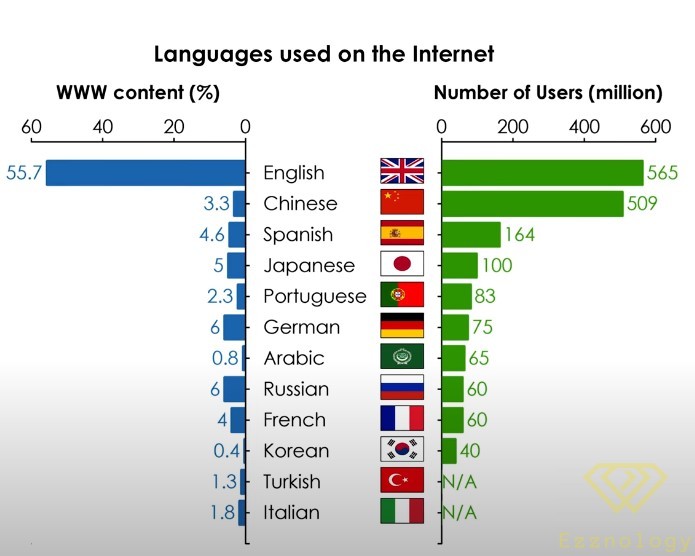
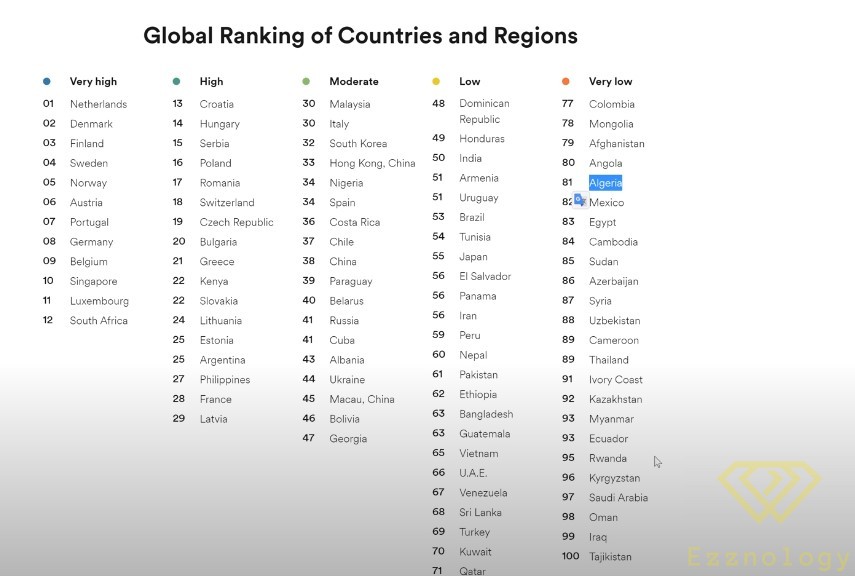
The properly framed question, based on statistics showing that Arabs rank near the bottom
of nations that master and speak English fluently,
Also
there remains a significant gap between non-native English speakers and native speakers,
even if the gap is slight among countries that do not use English as a primary language — and this is due to several reasons, including for example:
- The declining level of education in the Arab world compared to the level of education in many other countries and nations.
- A very large portion of the nations that are proficient in a given language (other than their native tongue) were fundamentally under the occupation of other countries for a long period of time — such as the Maghreb, for example, which was occupied by France for an extended period, giving the Moroccan people the opportunity to master the French language; indeed, many of them reached the point where French became their mother tongue.
But when we look at another country like Egypt, for example, we find that it was occupied by Britain for approximately 70 years or more.
So why did we not master English fluently the way Morocco did with French?? And that is the real question.
Let me tell you that the British occupation was unable to impose English as the primary language of instruction in schools at that time,
especially at Al-Azhar Al-Sharif, whose academic subjects could not fundamentally be taught in English,
since they were primarily concerned with the Arabic language, its grammar, Islamic sciences, and other fields rooted in Arabic origins.
In addition to the translation effort, which was active during the British occupation at that time — as “Muhammad Ali” was keen on translating other sciences into Arabic,
to the extent that in order to graduate from his college, a student was required to translate a book in his field
from English into Arabic. All of these factors contributed to the stability of the Arabic language at that time,
and the occupier even ended up learning Arabic — which is, incidentally, something worthy of praise.

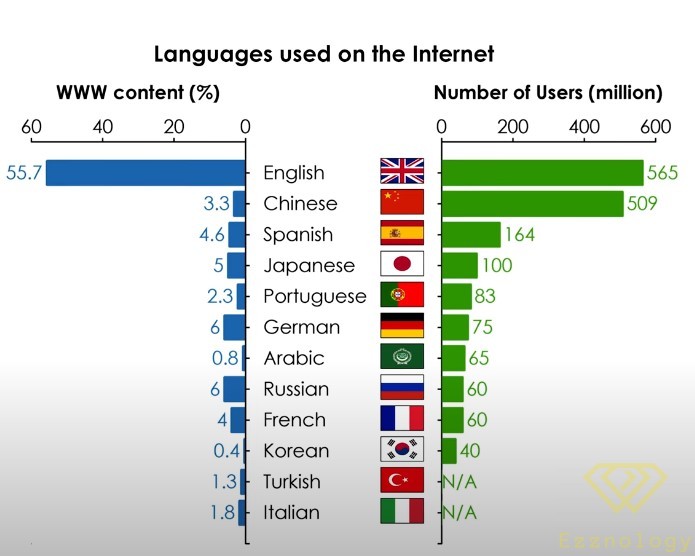
Why Does This Language Dominate?
- Because it is the language of international business and trade.
- Because it is relatively easy to learn.
- It is interconnected with many other languages as well.
- It is a flexible language.
- The need to access English-language resources across various fields during learning.
- It has become the language of science today, as the world's largest universities use it for instruction.
[divider style=”solid” top=”20″ bottom=”20″]
What Is the Core Problem Arabs Face in Learning English:
You may sometimes wonder where the main answer to this question lies — and why Arabs also fail to master English like so many other nations?
Here we must clarify a few other things in order to arrive at a comprehensive answer to this question.
The answer to this question can be summed up in a single word: “Confidence”,
A lack of self-confidence is the biggest factor preventing mastery of English, because it stops a person from practicing or learning the language with complete freedom,
without fear of making mistakes. This stems from the poor upbringing many of us were raised with — one that focuses on appearances while abandoning the core purpose,
The true goal of speaking English is to communicate effectively with others and ensure the intended meaning is conveyed,
and this can be achieved with the most minimal and basic linguistic ability — it does not require you to speak exactly like a foreigner,
or like a native speaker of the language; foreigners understand everything we say even if we mispronounce certain words or use incorrect grammar,
and we actually conducted a real experiment on this by asking a native English speaker whether weak language skills or poor grammar on our part posed a barrier to communication with them.
Why Don't Arabs Master English Like the Rest of the Nations?
Why Don't Arabs Master English Like the Rest of the Nations?
Read also more about:
- Xiaomi 12 Launch — The First Flagship Phones of 2022
- Exynos 2200 — A New Processor from Samsung
- Detecting Computer Viruses Without Specialized Software