In a federal courtroom in California, during a case he himself brought against OpenAI, Elon Musk said something few expected: his company xAI partly relied on models developed by OpenAI to improve the model behind its Grok chatbot. The remark landed amid a growing debate over how AI models are built, and where learning from a rival ends and copying begins.
What exactly did Musk say?
According to TechCrunch, reporting on April 30, 2026, Musk was asked whether xAI had used distillation on OpenAI models to train Grok. At first he avoided a direct answer, saying it is a general practice among AI companies. Asked whether that meant "yes," he replied with one word: "Partly."
Musk explained that distillation simply means training one model using another, and stressed that it is common across the industry, especially for testing and improving performance.
What is model distillation?
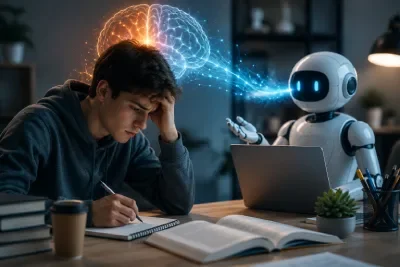
The discussion centered on model distillation, a technique in which a large model acts as a "teacher" to train a smaller, more efficient one. Think of a student learning from a skilled teacher's answers instead of reading the entire library alone.
How it works in practice
- A large number of questions and tasks are sent to the large "teacher" model.
- Its answers are collected, sometimes with confidence scores.
- The smaller "student" model is trained to imitate those answers.
- The result is a faster, cheaper model that performs close to the teacher on specific tasks.
Inside a single company this is legal and widespread; many of the small, fast models we use every day are distilled from bigger in-house models. It is a different matter when the teacher belongs to a competitor.
An old idea back in the spotlight
Distillation isn't new. The term became well known in machine learning after the 2015 paper "Distilling the Knowledge in a Neural Network" by Geoffrey Hinton and colleagues, and it later produced models such as DistilBERT, a smaller, faster version of Google's BERT. What has changed is the scale and commercial value of today's models: a frontier model's outputs are now an asset companies protect, often with terms that restrict using them to train competing models.
A growing legal debate
These practices put companies in a legal gray zone, where legitimate use overlaps with possible intellectual-property violations. TechCrunch notes that distilling from rival models may breach providers' terms of service, while it remains unclear whether it is explicitly illegal.
OpenAI and Anthropic have previously accused other companies, particularly Chinese labs, of using the technique to imitate their models and build open models of similar capability at lower cost. That is why Musk's admission stands out: it comes from a major US lab, not a foreign rival.
Why it matters to everyday users
- Price: distillation lowers running costs, which can mean cheaper subscriptions or more free features.
- Quality: a distilled model can inherit its teacher's errors and biases.
- Trust: you rarely know where an AI tool learned what it knows, one more reason to double-check its answers.
Background to the Musk–OpenAI dispute
The testimony is part of Musk's ongoing fight with OpenAI. Musk, one of OpenAI's early co-founders, accuses the company, CEO Sam Altman and Greg Brockman of abandoning its original nonprofit mission by shifting to a profit-seeking structure. The trial began the same week he testified.
The irony is that Musk is attacking OpenAI in court while admitting, in the same session, that his company benefited from its models. TechCrunch points out that xAI was founded in 2023, years after OpenAI, so learning from the market leader is hardly surprising. During the same testimony, Musk ranked today's leading AI providers: Anthropic first, then OpenAI, Google and Chinese open-source models.
FAQ
Is distilling a competitor's model illegal?
Unsettled. It may break a service's terms of use, but whether it is outright illegal has not been decided; that is a question for qualified legal experts.
Is Grok a copy of ChatGPT?
No. Musk said the use was "partly," and distillation means learning from another model's outputs, not copying the model itself.
Why are Musk and OpenAI in court?
Musk argues OpenAI strayed from its original nonprofit goal by becoming a for-profit business, which is the core of the case.
Musk's admission opens a bigger question than a personal feud: how AI models learn from each other, and who owns that knowledge. Clearer rules may come, but for now the line between inspiration and imitation in this industry remains blurry.
If you follow this kind of news, Arabic websites and specialized blogs cover it regularly, alongside Egypt stores, Kuwait stores, vitamin stores and international sites, plus Mashhor for social media services.