
What is IaaS (Infrastructure as a Service)?
Infrastructure as a Service (IaaS) refers to servers and storage hosted in the cloud.

What does Infrastructure as a Service (IaaS) mean?
In computing, infrastructure refers to the computers and servers that run code and store data, as well as the cables and devices that handle communication between those machines. For example, servers, hard drives, and routers are all part of the infrastructure. Before cloud computing was an option, most companies hosted their own infrastructure and ran all their applications on-premises.
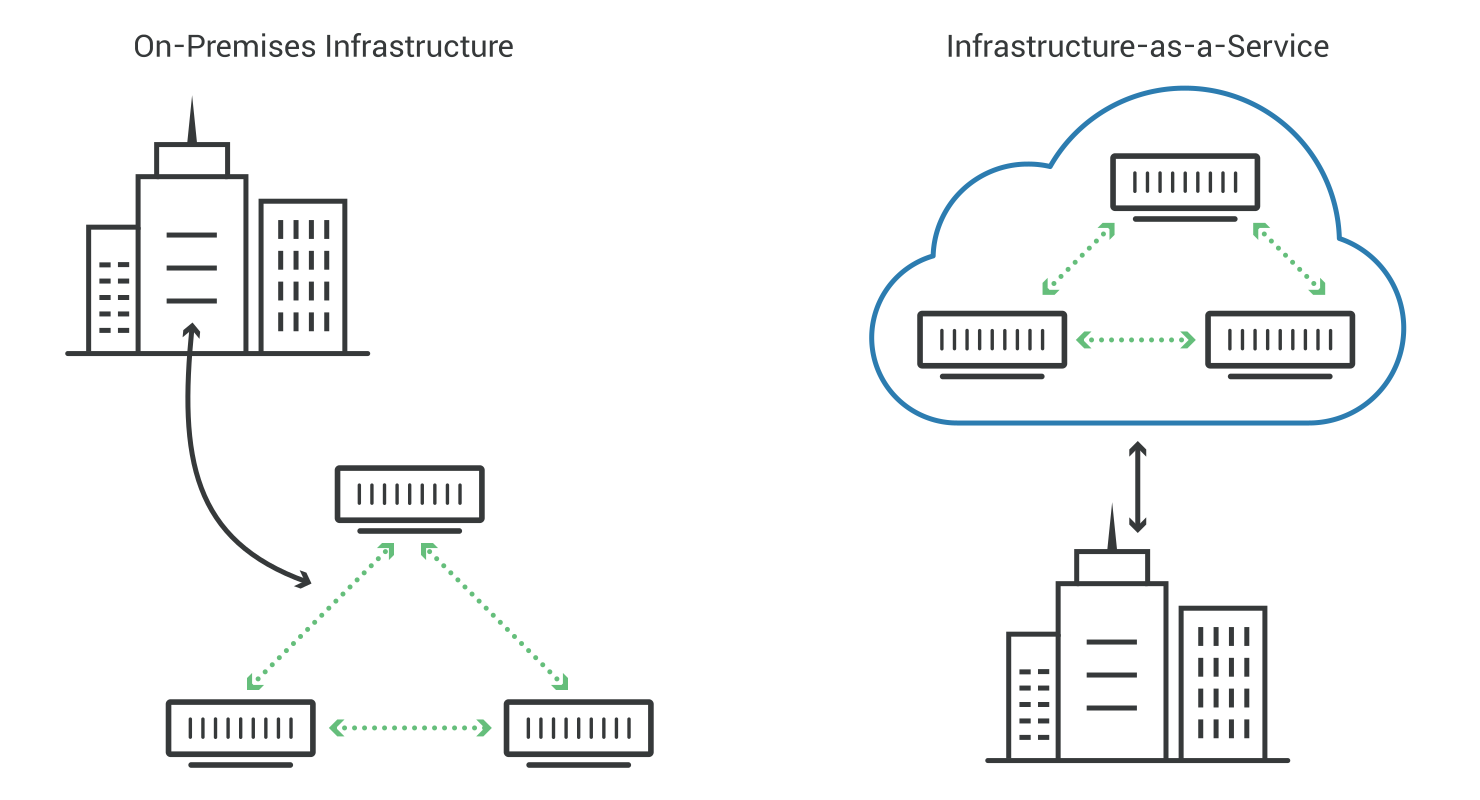
Infrastructure as a Service, or IaaS for short, is when a cloud computing vendor hosts the infrastructure on behalf of its customers. The vendor hosts the infrastructure in the “cloud” – in other words, in various data centers. Their customers access this cloud infrastructure via the Internet. They can use it to build and host web applications, store data, run business logic, or do anything else that can be done on traditional on-premises infrastructure, but often with greater flexibility.
What are the main cloud computing models?
The three main cloud computing service models are:
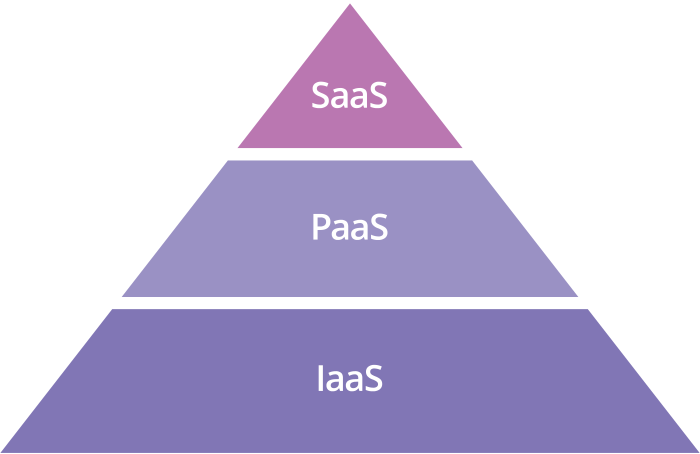
IaaS vs. PaaS vs. SaaS
IaaS is foundational infrastructure hosted in the cloud. IaaS includes virtual servers, cloud storage, cloud security, and access to data center resources (managed by the IaaS provider).
Platform as a Service (PaaS) is the next layer above IaaS in the cloud computing service model. It provides developers with a platform for building applications. Most PaaS offerings include development tools, middleware, operating systems, databases, database management, and infrastructure. Either the PaaS provider manages the infrastructure itself or purchases it as a service from an IaaS provider.
Software as a Service (SaaS) are fully hosted and managed applications in the cloud. SaaS users subscribe to an application and access it via the Internet, rather than purchasing it once and installing it locally.
Why do developers and businesses use IaaS?
Scalability: It is much easier to scale a business using IaaS as a foundation. Instead of purchasing, installing, and maintaining a new server every time the business needs to expand, they can simply add a new server on demand through the IaaS provider. On-demand scalability is a key advantage of cloud computing across all cloud service models.
Fewer resources dedicated to server maintenance: With IaaS, the company has essentially outsourced the purchasing, maintenance, and updating of servers to the IaaS provider. This is usually cheaper and requires less time and labor from internal teams than hosting their own infrastructure would.
Faster time to market: Companies using IaaS can deploy and update applications faster, since cloud service providers can deliver the infrastructure they need whenever they need it.
How does IaaS fit into multi-cloud and hybrid cloud deployments?
Multi-cloud deployments and most hybrid cloud deployments involve integrating multiple cloud services. Many companies that take a multi-cloud approach use a single cloud provider for IaaS and integrate with PaaS and SaaS services as well. Some companies may also use multiple IaaS providers, either for redundancy or to handle separate computing workloads in parallel.
Companies using hybrid clouds can combine IaaS with on-premises infrastructure or a private cloud, alongside other public cloud services.
You may also like:
New Malware Destroying Windows Devices | ESET