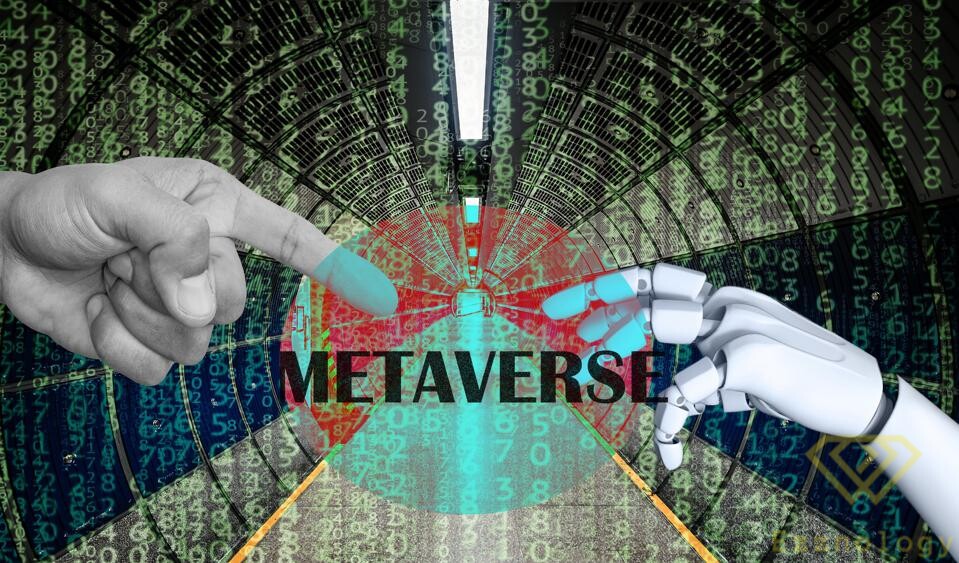
What is the Metaverse and why should you care?

As veteran tech writer Eric Ravenscraft wrote in Wired several weeks ago, “It has been … months since Facebook announced it was rebranding to Meta and that its future would focus on the coming “Metaverse.” At the time, what that term meant was no clearer.”
Assuming the “Metaverse” is likely to affect our lives in several ways, some currently unfathomable, in the coming years – and that many of you are also confused by this and other developments in the tech world – I recently sat down with one of my favorite technologists, Kristy Woolsey, Associate Director at BCG Platinion, to learn more.
What I like about Woolsey is that she speaks in plain, easy-to-understand English, avoiding “tech-speak” as much as possible.
Here is some of what she said:
Q: What is the Metaverse?
The term Metaverse is used to describe a combination of virtual reality and mixed reality worlds accessed through a browser or headset, allowing people to interact and have experiences in real time across distances.
“Right now, what will become the Metaverse is actually a series of disconnected metaverses, like the ‘walled gardens’ of the early internet [darpa.net or bit.net or aol.net] that eventually came together to form the Internet as we know it today. The current collection of metaverse worlds each has its own access, avatars, interactions, and currency. Fortnite, for example, is separate from Roblox, which is separate from Decentraland and others.”
“… The reason for the current surge in interest in the Metaverse is partly due to the very recent ability to truly ‘own’ virtual objects, experiences, or land. Blockchain technology, the ‘crypto financing hub’, enables a virtual object to be precisely identified so that it can be bought and sold. There are entire worlds built on this new economy. Decentraland and Sandbox, for example, are both metaverse worlds that sell virtual land to companies that build virtual buildings. Sotheby’s, the nearly 300-year-old auction house, has a building in Decentraland where you can embody an avatar and watch what is being auctioned. Republic Realm, a company that develops land in the Metaverse, recently paid $4.3 million for a piece of virtual land in the Sandbox metaverse world.”
“If paying real money to own virtual land sounds a bit crazy, remember when most of us thought buying domain names was crazy. But then, suddenly, it wasn’t crazy … [and many] made a lot of money selling desirable domain names.”
Q: Why should leaders care?
“If you are trying to reach an audience between the ages of 15 and 30, they may no longer be on the internet or on social media anymore — they are likely in the Metaverse.
“Nikeland opened, a place to hang out and play and dress your avatar in virtual Nike products, on Roblox last year. By early this year, nearly seven million people had visited Nikeland. In 2020, 12.3 million people attended a single virtual concert by rap artist Travis Scott, hosted by Fortnite. When you watch the concert video (available online), you realize after a short time that the dancing characters … were all real people, connected from locations around the world.”
“There are things you can do in virtual reality and augmented reality that you cannot do in real life across distances. You can simulate being together in ways that are not possible over Zoom. You can point to something to explain it, use hand gestures (on some platforms), draw on a piece of paper, and go places together. Think of the amazing possibilities, like collaboration between surgeons, or creating a clay model to design a new car. These and all kinds of other collaborative activities are all easy in the right metaverse world, eliminating the barrier of distance.”
“For organizations, a virtual or hybrid meeting feels closest to being together in a room. Of course, it’s not the same on a personal level, but it’s the next best thing. My team is set up to hold collaborative meetings this way. And when we need a work break, we have 15-minute one-on-ones to play virtual table tennis with colleagues from around the world. It’s the virtual equivalent of an office coffee break; it creates real connection and builds social bonds.”
Q: When will it arrive?
She predicted that within two years, we will see “massive adoption and absorption.” “It’s only a matter of time.”
Q: What should leaders do about it now?
Woolsey said that organizations need to look at three metaverse categories:
1) Customer or consumer facing. “If the market you are targeting is between 15 and 30 years old, you need to be there. You need to offer an experience that attracts your audience and aligns with your brand. You can create a store that sells virtual goods or connects with your e-commerce offerings, or you may choose to offer an event or some other type of engagement.”
2) Employee facing. “Metaverse experiences are ideal for hybrid meetings, multi-site training programs, and corporate events. Any time you have a dispersed team, there are opportunities to use this technology to bring them together and build community, belonging, and engagement.”
3) Internal operations. “Metaverse technology can be used to explore industrial or operational scenarios that might be too costly in real life. Car companies are already designing in ‘digital twins,’ running their first virtual crash test in a metaverse world, and collaborating on model adjustments in augmented reality.”
Q: How should businesses get started?
Woolsey cautioned to “not do Metaverse for the sake of doing Metaverse.” “Think carefully about where you are most likely to find value in each of the three categories I described. Go there now and experiment. Start small and test with your intended audience so you can understand the actual value in both qualitative and quantitative terms. Based on what you learn, find the path that provides strategic value and plan to scale.”
The ability to create value through the Metaverse should be one of the many tools available to your organization to achieve its strategic goals.
You may also be interested in:
What is Time to Live (TTL)? | TTL Definition
How to update and upgrade your system to Windows 11 | how to upgrade your system to windows 11