Personal Artificial Intelligence: A Technology That Will Change Humanity
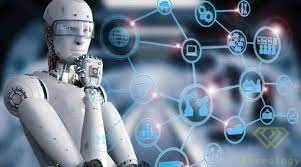
Is the concept of personal artificial intelligence truly a technology that will change humanity? Or is it still just in the experimental stage with nothing confirmed as of yet?
According to a recent report by Tortoise Intelligence,
investment in artificial intelligence has surged to a record high, reaching $77.5 billion over the past year.
Personal or Individual Artificial Intelligence
As a result of the direct interaction of learning programs with the living human mind,
and by programming it to interact with a single person only, artificial intelligence will become personal.
One could also say that the machine and the human will become two sides of the same coin,
and this will happen as the machine acquires the behavioral habits of the individual it interacts with.
Over time, the human mind will grow accustomed to this machine and rely on it in daily life.
A Different Kind of Communication with Artificial Intelligence
It seems that personal artificial intelligence is indeed a technology that will change humanity — but how?
This will happen through a new type of computer interface,
which will enable the machine and the human to communicate automatically and directly — no signals, no words, no languages.
The New Personal Artificial Intelligence
We mentioned earlier that the machine and the human will become two sides of the same coin, and that interaction between them will happen automatically.
Therefore, personal artificial intelligence is a new offspring of what is both electronic and biological.
According to what was published by the "TNW News" platform, which highlighted the key points from Dr. Kostikov's research,
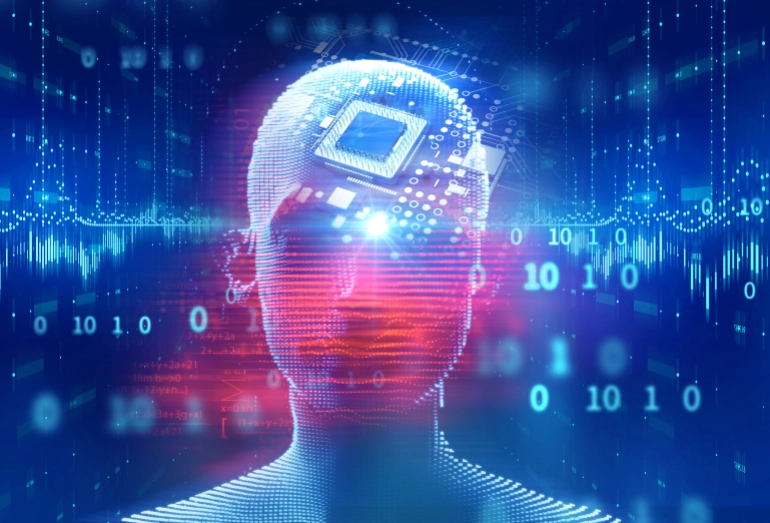
he stated that this artificial intelligence is a new, individual type built on the basis of a neural computer interface that connects the neurons in the human brain to a computer.
How the Neural Computer Interface Works in the New Artificial Intelligence
Inventors have not yet succeeded in finding an effective method
that can be relied upon to create a neural computer interface connecting human neurons to a computer,
despite all the success achieved in the field of artificial intelligence.
However, there have been several attempts to bring this human-electronic hybrid into reality,
and perhaps the most notable of these attempts is Elon Musk's famous Neuralink experiment, which ended in failure.
In this regard, many have said that the reason for this failure lies in the reliance on traditional surgical methods,
which makes overcoming the two biggest challenges in this field extremely difficult.
Here are the most important obstacles that, if overcome, are said to finally yield a successful attempt at realizing this massive project:
Challenge 1:
This lies in the fact that the detailed map of the human brain changes from time to time,
making it nearly impossible to interpret the activity of local focal points in the brain.
Additionally, the neurons responsible for certain functions vary from person to person,
meaning that even if we attempt to pinpoint neurons with precision, it will not work universally for everyone.
Challenge 2:
Perhaps this challenge is even more complex than the previous one: identifying the precise point of human-machine communication,
meaning the point at which neural impulses are converted into electronic signals and vice versa.
Do We Need Artificial Intelligence? In Our Lives and Why?
Scientists believe that humans genuinely need this new artificial intelligence more than ever before,
as the volume of information is multiplying at an enormous rate in recent times,
and the limited human mind cannot bear or even absorb this overwhelming amount of information.
Therefore, every person needs their own artificial intelligence system to give them the capacity at the very least,
or more precisely, to help them analyze the information available on the internet.
Read also about:
- What is the Neuralink chip that Elon Musk plans to implant in human brains in 2022
- Xiaomi 12 Launch — The First Flagship Phone of 2022
- Best 11 Apps on Windows 11 in 2022
- Exynos 2200 — A New Processor from Samsung