Will the Artificial Womb Replace the Biological Womb in China?
According to a report published by “South China Morning Post”, researchers in Suzhou, located in eastern China, have succeeded in developing an artificial intelligence system capable of monitoring and caring for embryos.
Is this artificial intelligence truly capable of protecting the fetus better than its mother’s womb? And will this lead to the abandonment of mothers??
In other words, will the artificial womb replace the biological womb in China??
According to what was reported by the Reviewed Journal of Biomedical Engineering last month,
experts say that this advanced system ensures that the fetus grows more safely and efficiently than in its mother’s womb,
and for this reason technology may in the future dispense with the mother’s womb,
and in general it can eliminate the need for a mother to carry her fetus,
replacing her womb with a technological system, also referred to as the ”artificial womb”.
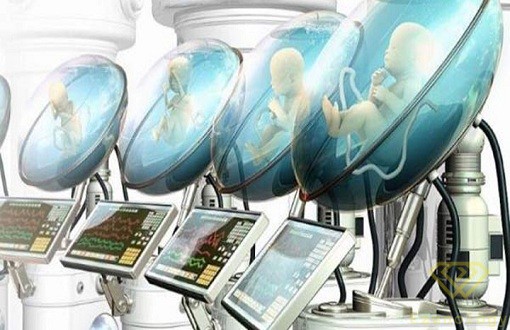
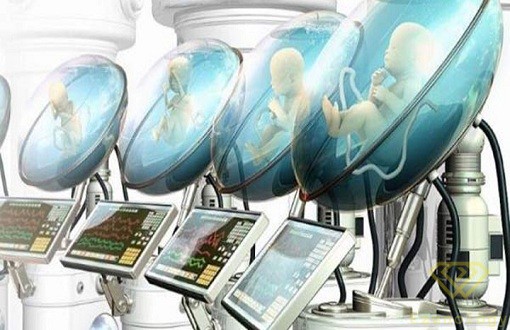
To explain this further, the artificial womb is a long-term embryo incubation device,
currently it takes the form of a container consisting of a straight line of cubes supplied with nutrient fluids; in addition, mouse embryos are currently growing inside this container as the artificial womb undergoes testing.
How the Artificial Womb Works:
The artificial womb, or incubator as some researchers have called it,
monitors the fetus around the clock with greater precision,
detecting the smallest signs of change occurring in the fetus,
and it also regulates carbon dioxide levels, as well as nutritional and environmental inputs, to ensure good nourishment for the fetus and better health.
Not only that, but artificial wombs can also distinguish the healthier and more developed fetus from the weaker one,
and if the health of one of the embryos deteriorates or is lost, it signals the person in charge to remove it from the container.
What Is the Future of the Human Fetus Under the Artificial Womb??
The question that remains is: will the artificial womb replace the biological womb in China?
All experiments conducted so far, and the developments Chinese researchers have achieved in this field, strongly suggest that the possibility of subjecting human embryos to a long-term incubation system is very high and closer to real-world application and testing,
however, there is a major obstacle to implementing this process, and that is international law,
which categorically prohibits any attempt to experiment on human embryos,
and despite these laws that restrain researchers from working on human embryos,
they have not given up, and development of the artificial womb is still underway and at very advanced stages, with the aim of convincing international law, on the grounds that there are many mysteries surrounding fetal growth inside the biological womb,
and it must be subjected to the artificial womb in order to solve these mysteries and remove the ambiguity.
Read also about:
- What is the Neuralink chip that Elon Musk will implant in human brains in 2022
- Top 11 Apps in Windows 11 in 2022
- Exynos 2200: A New Processor from Samsung
- Smart Home Devices at CES 22
- Detecting Computer Viruses Without Specialized Software