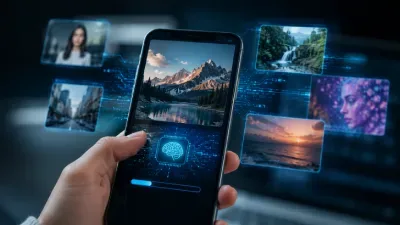
"A simple racing game, a red car on a desert road, collect coins and dodge rocks." Imagine typing that sentence and getting a playable prototype a few minutes later. That is what Unity says it is preparing: an AI tool that lets users create complete, playable games from text prompts alone, without coding knowledge.
Who is Unity and why does this matter?
Unity is one of the most widely used game engines in the world, powering a large share of mobile games as well as PC, console and VR titles. Any change in how the engine works affects a huge range of developers, from big studios to the solo indie developer working from a bedroom.
How games are usually made
Developing any game, even a simple one, normally requires programming skills in languages such as C#, plus working with a complex engine and many tools: level design, character movement, physics and setting up graphics and sound. These skills take months to learn, which stops many people with ideas before they start.
Unity's new vision is different: describe your idea in natural language and let AI turn it into a game.
What exactly did Unity announce?
According to Digital Trends, the new tool will automatically build a playable prototype from a text description. CEO Matthew Bromberg said on the company's February 2026 earnings call that a beta of the upgraded Unity AI would be unveiled at the Game Developers Conference in March, and that it would let users create "full casual games" through prompts.
The tool will be built directly into the Unity editor, so an AI-generated prototype can be developed further in the same environment up to production quality. The platform will be able to generate game logic, visuals and the core technical structure from plain-language descriptions.
"AI-assisted authoring"
Unity calls this direction "AI-assisted authoring" and treats it as one of its main strategic priorities for 2026, aiming to remove the technical barriers that kept people out of game development. The goal is to open the door to hobbyists and beginners, not only professionals.
The technology relies on large language models from companies such as OpenAI and Meta to help generate code, visual assets and interactive content, and to carry out tasks inside the editor for the user.
Who benefits?
| Group | Expected benefit |
|---|---|
| Hobbyists and students | Try ideas without learning to code first |
| Indie developers | Faster prototypes and idea testing before investing time |
| Teachers | Simple educational games for the classroom |
| Studios | Shorter early stages and more time for design and quality |
What to watch for
- "Full game" is still vague: the talk is about casual games, and the tool is not expected to produce a big-studio title.
- Quality and originality: easier production may flood stores with similar games, making strong ideas and design more important than ever.
- Rights: developers should review the terms for AI-generated content before publishing commercially.
- Learning still matters: people who understand programming and design basics will get far more out of the tool.
An opportunity for Arab developers
Tools that lower the technical barrier could open the way for Arabic games with stories and characters from our own culture, made by people who never had the time or money to learn programming. A teacher could build a game to teach letters, and a small business owner could test a game idea before hiring a team.
If you like to follow tech news from more than one source, you can also browse Arabic websites and specialized blogs, along with Egyptian stores, Kuwait stores, vitamin stores and foreign websites, and rely on Mashhor for social media services if you manage accounts across several platforms.
FAQ
Can you make a game in Unity without coding?
That is what the new Unity AI promises: Unity says it will let users create casual games from natural-language prompts inside the editor.
Which AI models does Unity use?
Unity relies on large language models from companies such as OpenAI and Meta to generate code and content and to perform tasks in the editor.
Will these tools replace game developers?
More likely they will change the job, handling repetitive tasks and speeding up prototypes, while creativity, design and quality control stay with the developer.
If this vision works, we may see a new generation of interactive creators, much as happened with video and audio platforms. Unity is not just building a tool; it is trying to redefine who counts as a game developer in the AI era.